
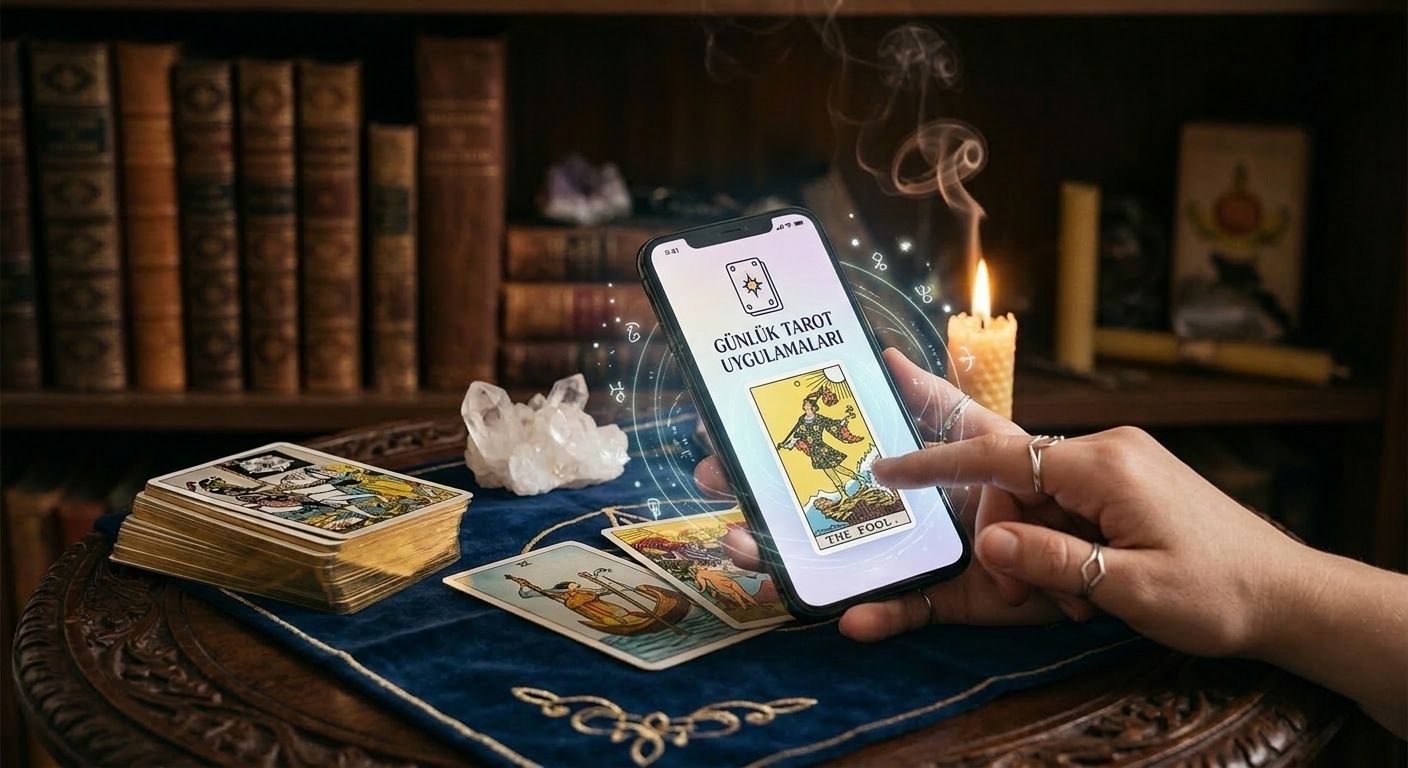
Daily Tarot Apps: A Guide to Accuracy, Predictions, and Digital Future Reading
In an age where we track our steps, our sleep, and our screen time with surgical precision, it’s no surprise that many are turning to their smartphones for spiritual alignment as well. The rise of daily tarot apps has transformed a centuries-old tradition into a modern ritual that fits right in your pocket. But can a digital algorithm truly provide the same depth as a physical deck? Can an app really offer insight into tarot future reading?
In this guide, we’ll explore the world of digital divination, the nuances of tarot accuracy in the palm of your hand, and how these tools may help you navigate your daily life with a bit more intention and wonder.
What Exactly Are Daily Tarot Apps? (A Beginner’s Guide)
For those new to the practice, tarot is a system of 78 cards, each steeped in rich symbolism, archetypes, and history. Traditionally, a reader shuffles a physical deck while focusing on a question, eventually drawing cards that “speak” to the situation.
Daily tarot apps replicate this experience using Random Number Generators (RNG) and high-quality digital artwork. Instead of tactile shuffling, you might tap a screen or shake your phone to “mix” the virtual deck. Most apps offer a “Card of the Day,” providing a single point of focus for your morning or evening reflection.
Why Use an App Instead of a Physical Deck?
-
Convenience: You can pull a card during a commute, in a waiting room, or before a stressful meeting.
-
Learning Tools: Apps often include built-in encyclopedias for card meanings, making them excellent for beginners.
-
Journaling: Many apps allow you to save your readings and write notes, helping you track your tarot predictions over time.
The Big Question: How Is Tarot Accuracy Possible in a Digital Format?
One of the most common debates in the spiritual community is whether a digital “draw” can be as accurate as a physical one. To understand tarot accuracy, we have to look at how we define the “magic” behind the cards.
The Spiritual Perspective: Energy via Silicon
Many practitioners believe that “energy follows thought.” From this viewpoint, your intention is what matters, not the medium. If you approach a daily tarot app with a focused mind and a sincere question, it is suggested that the “Universe,” “Source,” or your “Higher Self” can influence the digital algorithm just as easily as it can influence a physical hand. In this context, tarot future reading via an app is simply another way for the divine to communicate through modern technology.
The Psychological Perspective: Meaning-Making
From a psychological standpoint, the accuracy of a tarot app may lie in synchronicity—a term coined by Carl Jung. This suggests that the card you pull isn’t “predicting” a fixed future, but rather acting as a prompt for your subconscious.
When you see a digital Three of Swords (often suggesting heartbreak or sorrow) and it resonates with you, it may be because your brain was already processing a specific grief. The app didn’t “know” your secret; it simply provided the mirror you needed to see it. This makes the “prediction” feel accurate because it aligns with your internal reality.
Can Daily Tarot Apps Really Help with Tarot Future Reading?
When users search for “future reading,” they are often looking for a roadmap. It is important to approach this with a balanced view. Most experts agree that tarot—digital or otherwise—does not provide a 100% fixed blueprint of what will happen. Instead, it offers a glimpse into energetic trajectories.
The “Weather Forecast” Analogy
Think of a daily tarot app as a spiritual weather app. It doesn’t tell you that you must get wet; it tells you there is a 70% chance of rain.
-
Low Accuracy: Treating the app as a deterministic “fortune teller” that removes your free will.
-
High Accuracy: Using the app to see which “winds” are blowing so you can choose whether to carry an umbrella or stay inside.
By checking your app daily, you may begin to notice patterns. If The Magician keeps appearing, it can suggest that you have the tools you need to start a new project. Whether you actually start that project is up to you—and that’s where the “future” is truly made.
Long-Tail Intent: How to Improve the Quality of Your Tarot Predictions
If you feel like your app readings are “hit or miss,” there are several ways to sharpen the focus and improve the perceived tarot accuracy of your digital sessions.
1. Set a “Digital Sacred Space”
Before opening the app, take three deep breaths. Clear your mind of the scroll-heavy energy of social media. Treating the app with the same respect as a physical deck may help you tune into your intuition more effectively.
2. Ask “How” and “What” Instead of “Will I?”
Instead of asking, “Will I get the job?” (which puts you in a passive position), try asking:
-
“What energy should I bring to my interview today?”
-
“How can I best navigate the challenges coming my way this week?”
3. Study the Symbolism
Don’t just read the “canned” text provided by the app. Look at the digital art. Does a specific color stand out? Does the character’s expression remind you of someone? These personal “hits” are often where the most profound tarot predictions are found.
Symbolic Perspectives: Understanding the Digital Archetypes
The power of tarot lies in its archetypes—universal patterns of human experience. When you use a daily app, you are engaging with these 78 “personalities.”
-
The Major Arcana: These represent “Big Life Lessons.” If your app pulls a Major Arcana card (like The Empress or The Tower), it might suggest that the day’s events are part of a larger soul-growth cycle.
-
The Minor Arcana: These represent “Daily Life.”
-
Wands: May suggest passion, career, or creative sparks.
-
Cups: Often point to emotions, relationships, and intuition.
-
Swords: Usually reflect thoughts, communication, and mental conflict.
-
Pentacles: Can suggest finances, health, and physical security.
By understanding these suits, your daily app becomes a tool for categorical mindfulness. If you pull a Knight of Swords, you might tell yourself, “Today, I should be careful not to speak too harshly.”
Daily Tarot Apps vs. Human Readers: Which is Better for Predictions?
This is a common concern for those seeking “real” tarot future readings.
| Feature | Daily Tarot App | Professional Human Reader |
| Speed | Instant, 24/7 access. | Requires an appointment. |
| Cost | Usually free or low one-time fee. | Can be expensive per session. |
| Nuance | Standardized interpretations. | Deeply personalized to your life. |
| Objectivity | No personal bias from the “reader.” | The reader’s own energy can influence the reading. |
| Experience | Great for learning and reflection. | Best for complex, life-changing questions. |
Many people find that using an app daily for “maintenance” and seeing a professional reader twice a year for “deep dives” offers the best of both worlds.
Is it “Cheating” to Use an App for Tarot Future Reading?
In the spiritual community, some purists argue that the “physical touch” is essential. However, the history of tarot is one of constant evolution. From hand-painted cards for Italian nobles to mass-produced decks in the 1900s, tarot has always adapted to the technology of the time.
Using an app isn’t “cheating”; it is simply an evolution of the tool. If the goal of tarot is to provide clarity, comfort, and a moment of presence, then any tool that achieves that—be it cardstock or a liquid crystal display—is fulfilling its purpose.
FAQ: Everything You Need to Know About Digital Tarot
Are tarot apps truly random?
Most apps use a Random Number Generator (RNG). While this is “random” in a computer science sense, many believe that synchronicity can work through these mathematical structures to present the card you need to see.
Can a daily tarot app tell me if someone is thinking of me?
Tarot apps are best used for self-reflection. While some cards might suggest social connection or communication, using an app to “spy” on others’ thoughts can often lead to more confusion than clarity. It is usually more helpful to ask the cards how you can better handle your feelings for that person.
Do I need to pay for a “Pro” version to get better tarot accuracy?
Generally, no. The “Pro” versions usually offer more deck varieties, more complex spreads (like the Celtic Cross), and better journaling features. The “accuracy” comes from your interpretation and focus, not the price of the app.
What is the best app for a beginner?
Apps like Labyrinthos, Golden Thread Tarot, and Trusted Tarot are highly rated for their educational content and clean interfaces. They offer card meanings in an easy-to-digest format which is perfect for building your foundational knowledge.
Long-Tail Intent: Common Pitfalls of Relying on Daily Tarot Apps
While these apps are wonderful tools, it’s possible to use them in ways that diminish their value.
-
“Card Fishing”: This happens when you don’t like the card you pulled, so you close the app and open it again to get a “better” one. This usually muddies the energy and leads to lower tarot accuracy. It’s often better to sit with a “difficult” card and ask what it’s trying to teach you.
-
Over-Reliance: Using an app to decide every minor detail of your day can lead to decision paralysis. Remember: the cards suggest, but you decide.
-
Ignoring the Context: A card like The Lovers doesn’t always mean a new romance is coming. In a daily context, it might simply suggest you need to make a choice that aligns with your values.
Final Thoughts: The Future of Tarot in the Digital Age
The beauty of daily tarot apps is that they bring ancient wisdom into the mundane moments of modern life. Whether you are looking for tarot predictions to help you plan your week or you simply want a moment of quiet reflection before your day begins, these digital decks offer a unique and accessible gateway.
Remember that tarot accuracy is a journey, not a destination. It is a dialogue between the cards, your intuition, and your life experiences. As long as you approach your phone with a sense of curiosity and an open heart, the digital “shuffle” may just reveal the magic you’ve been looking for.