
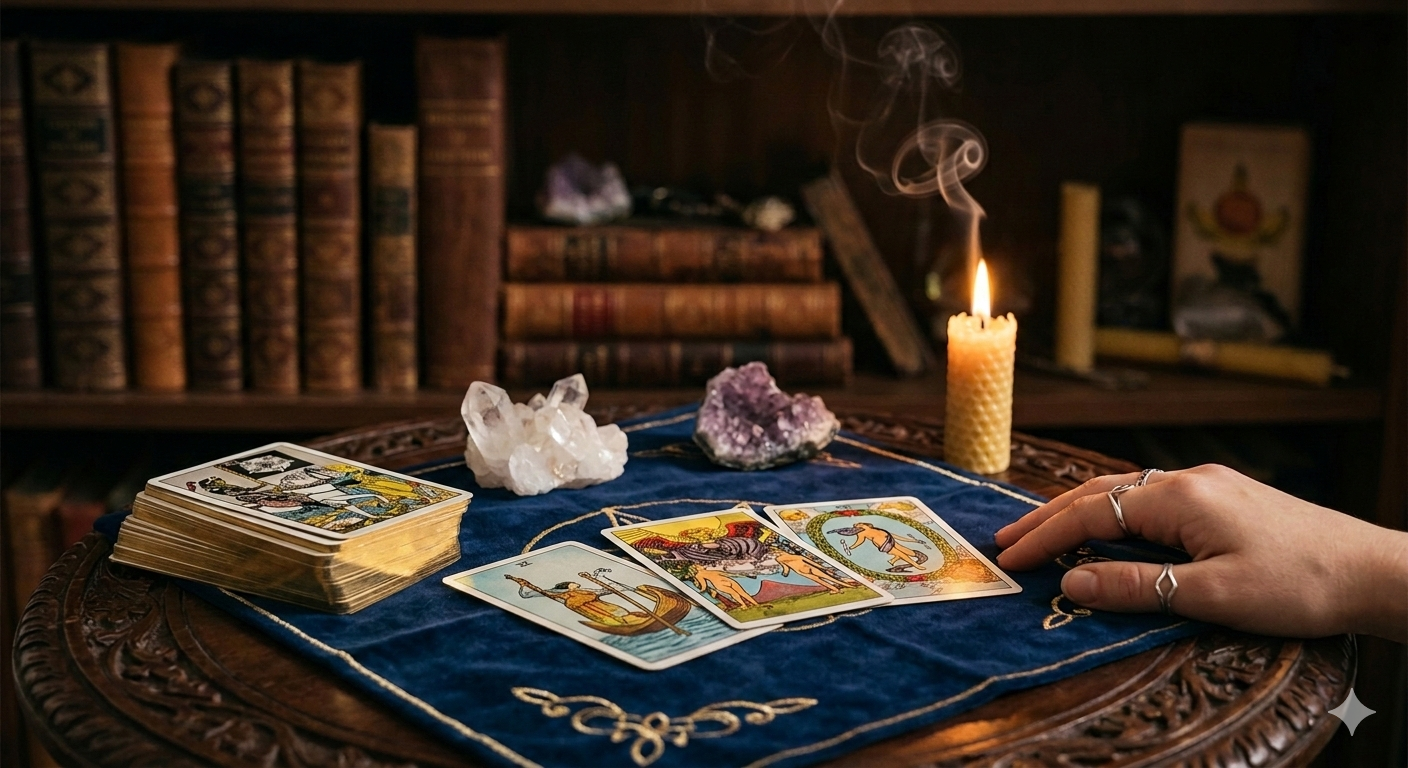
What is Tarot? A Beginner’s Guide to the Deck
Before we dive into the predictive power of the cards, let’s establish what we’re actually working with. A standard tarot deck consists of 78 cards, divided into two main categories:
The Major Arcana (22 Cards)
These cards represent significant life lessons, archetypal themes, and “big picture” energies. When cards like The Fool, The Lovers, or The World appear, they often suggest major shifts or spiritual milestones that may be unfolding in your life.
The Minor Arcana (56 Cards)
These cards deal with the “nitty-gritty” of daily existence. They are divided into four suits:
-
Cups: Often relate to emotions, relationships, and intuition.
-
Pentacles: Usually suggest themes of work, finances, and the physical world.
-
Swords: Frequently represent intellect, communication, and conflict.
-
Wands: May indicate passion, creativity, and drive.
Understanding this structure is key to understanding tarot predictions. The cards don’t just “tell” a story; they provide a symbolic language that a reader interprets based on the context of your life.
Can Tarot Cards Really Predict the Future?
The short answer? It depends on how you define “predict.”
If you are looking for a crystal ball that provides a fixed, unchangeable script of your life, tarot may surprise you. Most modern experts view a tarot future reading not as a set-in-stone decree, but as a “spiritual weather report.”
Just as a meteorologist looks at current atmospheric pressure and wind speeds to suggest it might rain tomorrow, a tarot reader looks at your current energy, choices, and environment to suggest where your path may lead.
The Concept of Trajectory
Tarot often works by showing the most likely outcome based on the direction you are currently heading. If the cards suggest a challenging outcome, it isn’t necessarily a “curse.” Instead, it can be seen as a gentle nudge to change your current behavior to avoid that specific result. This is why many find tarot accuracy so compelling—it reflects the consequences of our current actions back to us.
The Psychological Perspective: A Mirror to the Subconscious
Many skeptics and psychologists find value in tarot without needing to believe in the supernatural. This approach suggests that tarot works through projection and archetypal recognition.
Jungian Archetypes and Synchronicity
The famed psychologist Carl Jung believed in “synchronicity”—the idea that meaningful coincidences occur without a direct causal link. In a tarot reading, the cards you pull may not be “random” in a psychological sense. Instead, your mind may project its internal struggles and desires onto the imagery of the cards.
-
Archetypes: The cards represent universal human experiences (the Mother, the Father, the Hero, the Villain). When you see The Empress, your mind may automatically link it to your own feelings about nurturing or abundance.
-
Subconscious Clarity: Sometimes, we already know the answer to our problems, but our conscious mind is too cluttered to see it. A tarot reading can act like a Rorschach inkblot test, helping you “see” the truth you’ve been hiding from yourself.
The Spiritual Perspective: Connecting with Energy
For those who lean into the mystical, tarot is seen as a bridge between the physical world and the divine or the “Universal Unconscious.”
Tapping into the Akasha
Some readers believe that tarot predictions are possible because they tap into the “Akashic Records”—a spiritual library of everything that has happened and everything that could happen. In this view, the reader acts as a conduit, using their intuition to pull the cards that align with your soul’s current vibration.
Divine Guidance and Spirit Guides
Many practitioners suggest that they receive help from spirit guides or ancestors during a reading. From this perspective, the cards are simply tools to help translate messages from a higher frequency into a language we can understand.
How Accurate are Tarot Cards for Future Predictions?
When people ask about tarot accuracy, they are usually asking if the cards “get it right.” The accuracy of a reading is often a blend of three things:
-
The Reader’s Intuition: A skilled reader doesn’t just read a guidebook; they “feel” the cards and how they interact with one another.
-
The Querent’s Openness: If you are “closed off” or trying to “test” the cards, the energy of the reading may feel muddy or confusing.
-
The Specificity of the Question: Vague questions often lead to vague answers. Asking “Will I be happy?” is much harder to “predict” than “What energies are surrounding my current career path?”
Note: Accuracy in tarot is rarely about 100% hits. It’s often about the relevance of the advice given and how well it helps the individual navigate their reality.
Why Do Tarot Readings Sometimes Come True?
Is it magic, or is it something else? There are a few reasons why a tarot future reading might seem eerily spot-on:
1. Pattern Recognition
Humans are naturally wired to find patterns. If a tarot reading suggests “a new emotional beginning” and you meet someone new three days later, your brain will naturally link those two events. This doesn’t make the reading “fake,” but it does highlight how our perception plays a role in the experience.
2. Self-Fulfilling Prophecies
If a reading suggests you will be successful in a new business venture, you might feel a surge of confidence. That confidence leads you to work harder and take more risks, which eventually leads to success. In this case, the tarot didn’t “cause” the future—it provided the psychological boost necessary for you to create it.
3. Intuitive “Leaps”
Experienced readers often pick up on subtle cues—body language, tone of voice, or “gut feelings”—that allow them to make educated guesses about a person’s life. When combined with the cards, these leaps can feel like genuine prophecy.
Long-Tail Intent: Can Tarot Predict Specific Dates and Names?
One of the most common searches is whether tarot can give specific details like a wedding date or a person’s name.
The consensus among many experts is that tarot is not great with linear time. Because the cards deal with energy, and energy is fluid, pinning down a specific Tuesday in October can be difficult. Some readers use “timing techniques” (linking suits to seasons or using card numbers), but these are usually presented as “possible windows” rather than “deadlines.”
As for names, while some readers claim to “hear” or “see” names, the cards themselves (being symbolic) rarely point to “John” or “Sarah.” Instead, they might show a “King of Swords” energy, which suggests a person who is logical, authoritative, and perhaps an air sign (Gemini, Libra, Aquarius).
The Difference Between Tarot and Fortune Telling
While the terms are often used interchangeably, there is a subtle but important difference:
| Feature | Fortune Telling | Tarot Reading |
| Philosophy | Destiny is fixed; what will happen is certain. | The future is fluid; you have free will. |
| Tone | Often fatalistic (“You will meet a tall stranger”). | Often empowering (“You may encounter an opportunity for growth”). |
| Focus | On the outcome. | On the process and the lesson. |
| Goal | To know the future. | To understand the present and influence the future. |
How to Get the Most Out of a Tarot Reading
If you’re a beginner looking to explore tarot future reading, here are a few tips to ensure a meaningful experience:
-
Ask Open-Ended Questions: Instead of “Will I get married?”, try “What can I do to prepare myself for a healthy relationship?”
-
Focus on the “How” and “Why”: Ask for the underlying energy of a situation rather than just the result.
-
Keep an Open Mind: Sometimes the cards tell you what you need to hear, not necessarily what you want to hear.
-
Don’t “Double-Dip”: Asking the same question over and over until you get the answer you want usually results in confusing, contradictory readings.
FAQ: Common Questions About Tarot and the Future
Can tarot cards predict death?
Most ethical tarot readers will not attempt to predict death. The Death card itself almost never means physical passing; instead, it suggests a profound transformation, the ending of a cycle, or “pruning” something that no longer serves you.
Is tarot dangerous?
Tarot cards are simply ink and paper. They do not have a “mind” of their own, nor are they “evil.” The only “danger” lies in becoming overly reliant on them or letting a reading cause unnecessary anxiety.
Can I read my own tarot cards?
Absolutely! Many people find that reading for themselves is a powerful form of daily meditation and self-reflection. However, it can be hard to remain objective when you’re deeply invested in the outcome.
Why was my reading wrong?
If a prediction didn’t come to pass, it could be for several reasons:
-
Free Will: You or someone else involved made a choice that shifted the trajectory.
-
Misinterpretation: The reader may have misinterpreted the cards’ symbolism.
-
Wrong Timing: The event may still happen, but not on the timeline you expected.
Conclusion: You Are the Architect of Your Destiny
So, can tarot cards really predict the future? They can certainly offer a fascinating glimpse into the patterns, energies, and possibilities that surround you. They can highlight obstacles you haven’t seen and strengths you haven’t acknowledged.
However, the most important thing to remember is that you hold the pen. Tarot can show you the map, but you are the one driving the car. The cards suggest a destination, but if you don’t like where you’re headed, you always have the power to take the next exit and find a new road.
Whether you use tarot as a spiritual tool or a psychological exercise, its true value lies in helping you live a more conscious, intentional life in the present moment.