
Your Guide To All Things Tarot
Tarot, a mystical and ancient art of divination, has been a source of guidance and insight for countless individuals throughout history. Originating from the 15th century in Europe, tarot cards have evolved from simple playing cards to powerful tools of intuition, self-reflection, and spiritual growth.
This guide aims to provide an in-depth understanding of tarot, its history, symbolism, and its transformative potential.
History of Tarot
The tarot’s origins are shrouded in mystery. Some believe it originated in ancient Egypt, while others attribute its birth to medieval Europe. The first documented tarot decks were recorded in the 15th century in Italy, known as “Tarocchi” cards, used primarily for playing games.
It wasn’t until the 18th century that tarot began its journey as a tool for divination. Occultists and mystics saw deeper meanings in the cards, connecting them to ancient Egyptian lore, Kabbalah, and other esoteric traditions.
Structure of the Tarot Deck: Delving Deeper into the Mystical Cards
The tarot deck, with its intricate designs and profound symbolism, is a reflection of the universe’s vast tapestry. To truly understand its depth, one must familiarize themselves with its structure, which is divided into the Major and Minor Arcana. Let’s delve deeper into these categories and the symbolism they carry.
1. Major Arcana: The Soul’s Journey
The Major Arcana consists of 22 cards, each representing significant life events, spiritual lessons, and the soul’s journey through various stages of enlightenment. These cards are often seen as archetypes, universal symbols that resonate with our collective unconscious.
- The Fool (0): Symbolizing new beginnings and adventures, innocence, and spontaneity.
- The Magician (I): Represents manifestation, resourcefulness, and power.
- The High Priestess (II): Intuition, unconscious knowledge, and mystery.
- The Empress (III): Fertility, nurturing, and abundance.
- The Emperor (IV): Authority, structure, and control.
- The Hierophant (V): Spiritual wisdom, religious beliefs, and tradition.
The Major Arcana’s journey culminates with The World (XXI), symbolizing completion, accomplishment, and celebration.
2. Minor Arcana: The Daily Dance of Life
The Minor Arcana, consisting of 56 cards, mirrors our daily experiences, emotions, thoughts, and challenges. These cards are divided into four suits, each representing a different element and aspect of life.
- Cups (Water): This suit delves into the realm of emotions, relationships, and connections. The Ace of Cups, for instance, signifies a new emotional beginning, while the Ten of Cups embodies emotional fulfillment and happiness.
- Wands (Fire): Representing inspiration, spirituality, and determination, the Wands suit is all about our passions and ambitions. The Ace of Wands indicates a new inspiration or opportunity, while the Ten of Wands may suggest burdens and responsibilities.
- Swords (Air): The realm of intellect, thoughts, and conflicts is encapsulated in the Swords suit. The Ace of Swords marks clarity or a breakthrough, while the Ten of Swords might indicate betrayal or endings.
- Pentacles (Earth): Grounded in the material world, this suit speaks of finances, work, and health. The Ace of Pentacles heralds a new financial or career opportunity, while the Ten of Pentacles signifies wealth, stability, and family.
Each suit of the Minor Arcana has ten numbered cards (Ace through Ten) and four court cards: Page, Knight, Queen, and King. These court cards can represent personalities or specific energies in a reading.
Numerology in Tarot
Numbers play a significant role in tarot, adding another layer of interpretation. For instance, Aces (1) typically signify beginnings, while Tens indicate completion. The progression from Ace to Ten in each suit mirrors our journey from potential to fulfillment in that aspect of life.
Reading the Tarot: A Deep Dive into the Art of Divination
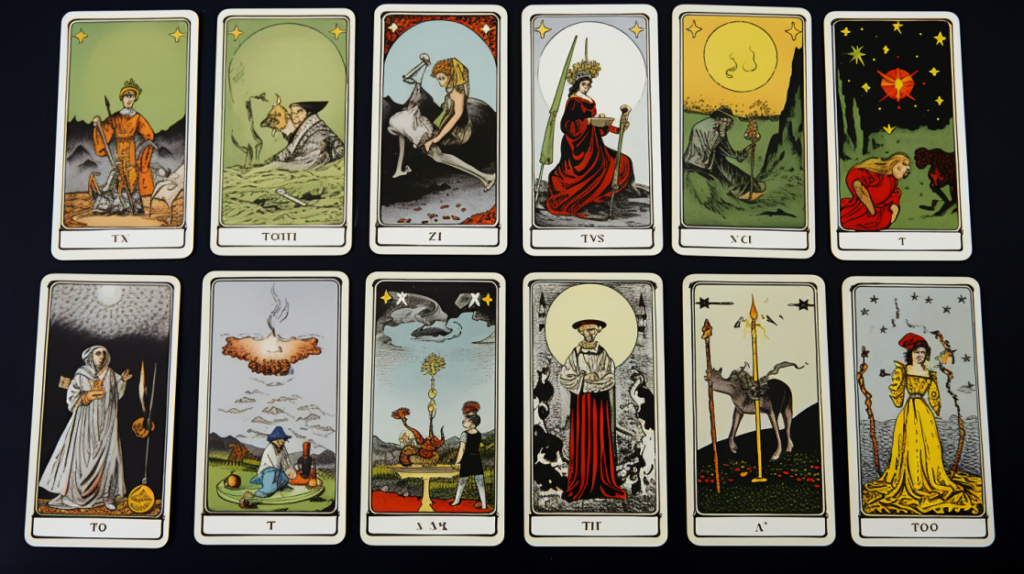
![tarot deck 1024x574[1]](https://souliapp.com//wp-content/uploads/2026/04/tarot-deck-1024x5741-1.png)
Tarot reading is much more than simply drawing cards and interpreting their meanings. It’s a sacred ritual, a dance between the conscious and the subconscious, the known and the unknown. This art requires a blend of intuition, knowledge, and empathy. Let’s delve deeper into the process of reading the tarot.
1. Preparing the Space
Before you begin a tarot reading, it’s essential to create a serene and sacred environment. This can be achieved by:
- Cleansing the Space: Use sage, palo santo, or incense to cleanse the area of negative energies.
- Setting the Ambiance: Light candles, play soft music, or use essential oils to create a calming atmosphere.
- Grounding: Take a few deep breaths, meditate, or visualize a grounding cord connecting you to the earth.
2. Setting the Intention
Every tarot reading starts with a clear intention or question. This serves as a guiding light for the reading, directing the energy and focus.
- Be Specific: Instead of asking, “Will I find love?”, consider, “What can I do to attract a loving relationship?”
- Avoid Yes/No Questions: Tarot offers insights and guidance, not definitive answers. Frame your questions to seek clarity and understanding.
3. Connecting with the Deck
Your tarot deck is a tool, and like any tool, it works best when treated with respect and care.
- Shuffling the Cards: As you shuffle, focus on your intention. This transfers your energy to the deck.
- Cutting the Deck: Some readers prefer to cut the deck into three piles and then reassemble, believing it infuses the cards with the querent’s energy.
4. Drawing the Cards
Depending on the nature of the question and the depth of insight sought, you can draw a single card or use a specific spread.
- Single Card Draw: Ideal for daily guidance or simple queries.
- Three-Card Spread: Represents past, present, and future or situation, challenge, and advice.
- Celtic Cross: A detailed ten-card spread offering a comprehensive view of a situation.
5. Interpreting the Cards
While each card has a traditional meaning, the true power of tarot lies in intuition and personal interpretation.
- Context is Key: The meaning of a card can change depending on the question and surrounding cards.
- Reversed Cards: Some readers use reversed cards, which can indicate blocked energy or a different perspective on the upright meaning.
- Trust Your Intuition: Your first instinct or feeling about a card is often the most accurate. Trust your inner voice.
6. Closing the Reading
After interpreting the cards, take a moment to reflect on the insights and guidance provided. Thank the cards and your higher self or any spiritual entities you work with. Some readers also like to cleanse their decks after a reading, ensuring they’re ready for the next session.
Popular Tarot Spreads: Unlocking the Secrets of the Cards
Tarot spreads are specific layouts used to interpret the cards in a reading. Each position in a spread holds a unique meaning, and when a card is placed in that position, it’s interpreted in the context of that meaning.
While there are countless spreads used by tarot readers worldwide, some have stood the test of time due to their versatility and depth. Let’s explore some of the most popular tarot spreads in detail.
1. The Three-Card Spread
One of the simplest yet most versatile spreads, the three-card layout can be adapted to various questions and situations.
- Past, Present, Future: Understand the progression of a situation over time.
- Situation, Challenge, Advice: Gain insight into a current challenge and the steps to overcome it.
- Mind, Body, Spirit: Explore the balance and connection between these three aspects of oneself.
2. The Celtic Cross
A detailed ten-card spread, the Celtic Cross provides a comprehensive view of a situation, its influences, challenges, and potential outcomes.
- The Present: The current situation or challenge.
- The Immediate Influence: What’s directly influencing the situation.
- Foundation: The root or background of the situation.
- Recent Past: Events or energies that have recently affected the situation.
- Possible Outcome: The potential future if things continue as they are.
- Immediate Future: What to expect in the near future.
- Your Role: How you’re influencing the situation.
- External Influences: People or events outside your control that impact the situation.
- Hopes and Fears: Your hopes, dreams, and fears related to the situation.
- Final Outcome: The ultimate resolution or conclusion.
3. The Horseshoe Spread
A seven-card layout that provides insights into the past, present, future, and potential outcomes.
- Past Influences: Factors from the past affecting the current situation.
- Present Influences: Current energies or challenges.
- Hidden Influences: Unseen or subconscious factors at play.
- The Querent’s Attitude: Your feelings and mindset regarding the situation.
- External Influences: How others view the situation or their impact on it.
- Hopes and Fears: Your aspirations and worries.
- Final Outcome: The likely resolution based on current energies.
4. The Relationship Spread
A spread tailored to delve into the dynamics of a relationship, be it romantic, familial, or platonic.
- Your Position: How you view the relationship.
- Their Position: How the other person views the relationship.
- Foundation: The base or core strength of the relationship.
- Recent Past: Recent events or feelings that have influenced the relationship.
- Current Challenges: Present obstacles or issues.
- Near Future: The immediate trajectory of the relationship.
- Potential Outcome: The long-term potential or outcome of the relationship.
5. The Career Spread
Designed to offer insights into one’s professional life, this spread can guide career decisions, transitions, and growth.
- Current Position: Your current status or feelings about your job.
- Challenges: Obstacles or challenges you’re facing.
- Past Influences: Past events or decisions influencing your career.
- Future Possibilities: Potential opportunities or paths.
- External Influences: How colleagues, superiors, or external factors impact your career.
- Advice: Guidance or actions to consider.
- Potential Outcome: The likely result of following the advice or current path.
Tarot and Personal Growth: A Journey Within
![tarot resources 1024x574[1]](https://souliapp.com//wp-content/uploads/2026/04/tarot-resources-1024x5741-1.png)
The tarot, while often seen as a tool for divination, is also a powerful instrument for personal growth and self-discovery. Its rich symbolism and archetypes can serve as mirrors, reflecting our innermost thoughts, feelings, and patterns.
Let’s explore how tarot can be a transformative force in one’s personal development journey.
1. Self-Reflection and Awareness
Each tarot card, with its unique imagery and symbolism, can prompt introspection. By meditating on a card, one can uncover hidden fears, desires, and motivations. For instance, drawing The Hermit might prompt one to consider if they’re spending enough time in self-reflection or if they’re feeling isolated.
2. Decision Making and Clarity
Facing a tough decision? The tarot can offer a fresh perspective. While it doesn’t predict the future, it can highlight potential outcomes and influences, helping one make informed choices.
3. Healing and Emotional Release
Tarot can bring to the surface unresolved emotions and traumas. Engaging with these revelations can initiate a healing process. The Tower, for example, might signify upheaval, but it’s also a card of liberation and breaking free from constraining structures.
4. Goal Setting and Manifestation
Using tarot in goal setting can provide clarity on what one truly desires and the potential challenges and aids along the path. The Magician card, symbolizing manifestation and resourcefulness, can serve as a reminder of one’s power to turn dreams into reality.
5. Enhancing Intuition
Regularly working with tarot can sharpen one’s intuitive abilities. Over time, one learns to trust their inner voice and insights, strengthening the connection between the conscious and subconscious mind.
Choosing Your Tarot Deck: Finding Your Spiritual Ally
![tarot spreads 1024x574[1]](https://souliapp.com//wp-content/uploads/2026/04/tarot-spreads-1024x5741-1.png)
The market is flooded with a myriad of tarot decks, each with its unique artwork, theme, and energy. Choosing the right deck is a deeply personal decision, akin to finding a spiritual ally. Here’s a guide to help you navigate the process.
1. Resonance and Connection
Above all, a tarot deck should resonate with you. Whether it’s the imagery, the symbolism, or the energy it exudes, the deck should feel like an extension of yourself. Trust your intuition; if a deck “calls” to you, it’s likely a good fit.
2. Artwork and Imagery
The visual aspect of a tarot deck is crucial. The artwork should be clear, evocative, and aligned with your aesthetic preferences. Some might be drawn to traditional decks like the Rider-Waite, while others might resonate with modern or thematic decks.
3. Quality and Durability
Considering you’ll be using the deck frequently, it’s essential to ensure it’s of good quality. Check the card stock, finish, and overall durability. A well-made deck will withstand regular use and shuffling.
4. Guidebooks and Additional Resources
Many tarot decks come with guidebooks that provide insights into the cards’ meanings, symbolism, and interpretations. Especially for beginners, a comprehensive guidebook can be invaluable.
5. Themes and Specialties
There are tarot decks designed for specific purposes or themes, such as love, healing, or even specific cultures and mythologies. If you have a particular interest or focus, consider choosing a deck that aligns with that theme.
6. Recommendations and Reviews
While choosing a deck is personal, it can be helpful to read reviews or seek recommendations. Engage with tarot communities online or in-person to get insights into popular and trusted decks.
Tarot is a profound and multifaceted tool that offers guidance, clarity, and a deeper understanding of oneself and the universe. Whether you’re a seasoned reader or a curious beginner, the tarot’s wisdom is accessible to all who approach it with an open heart and mind.